
POTS Symptoms and Management: A Holistic Approach to Better Health
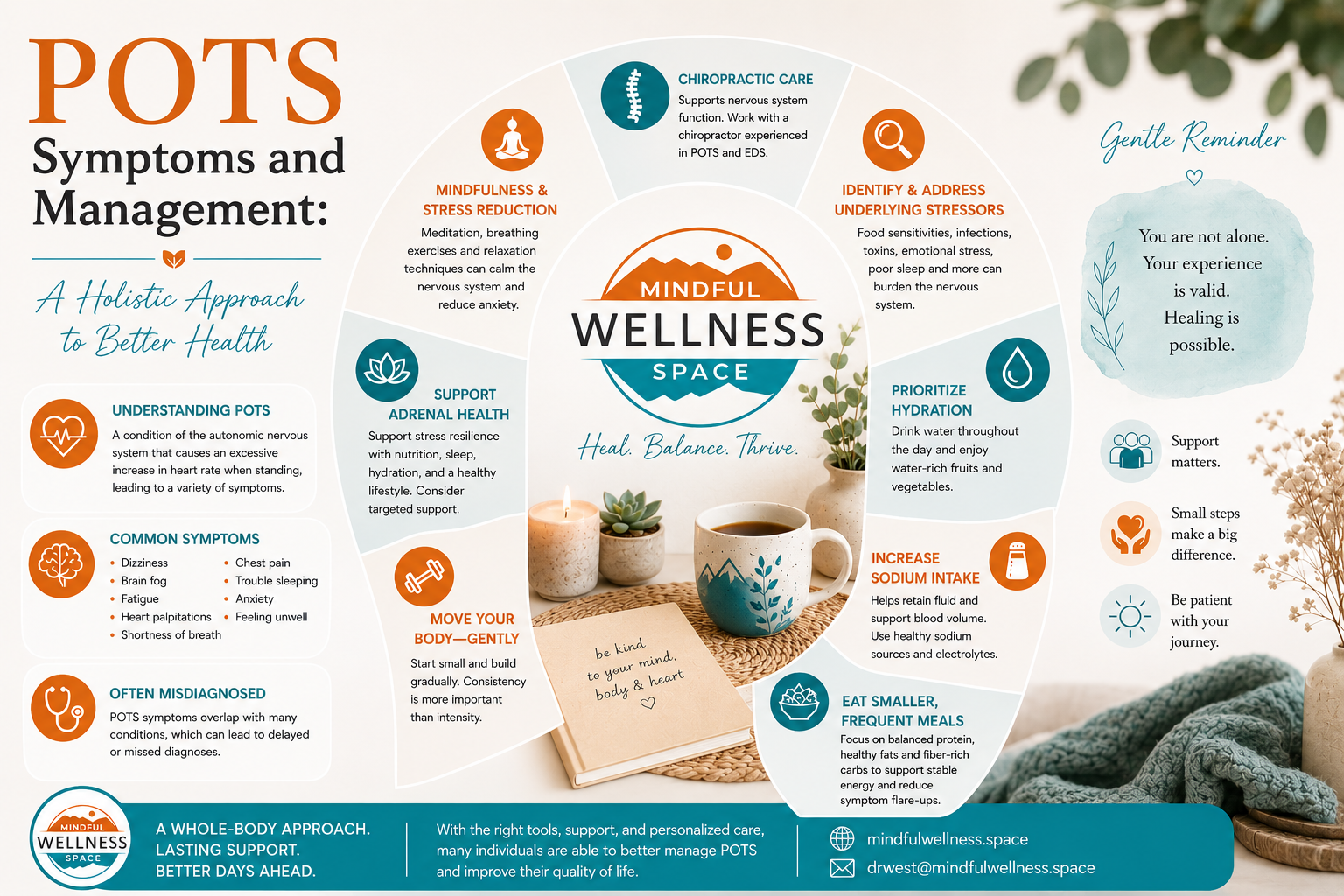
We’re here to help you and your loved ones navigate an often difficult and complex condition.
Understanding POTS
Postural Orthostatic Tachycardia Syndrome (POTS) is a condition that affects the body's autonomic nervous system—the system responsible for regulating many functions that happen automatically, such as heart rate, blood pressure, digestion, and temperature control.
When a healthy person moves from lying down to sitting or standing, gravity causes blood to temporarily pool in the lower body. Normally, the nervous system quickly adjusts by slightly increasing heart rate and tightening blood vessels to maintain blood flow to the brain.
For people with POTS, this response does not work properly. As a result, standing up can cause an excessive increase in heart rate (tachycardia) and a variety of uncomfortable symptoms, including dizziness, light-headedness, shortness of breath, chest discomfort, and heart palpitations.
What Is Dysautonomia?
POTS is one form of dysautonomia, an umbrella term used to describe disorders of the autonomic nervous system (ANS). Because the ANS controls so many essential functions, disruptions can affect nearly every aspect of daily life.
Simple activities such as standing in line, taking a shower, exercising, or even concentrating on a task can become challenging when the autonomic nervous system is not functioning properly.
How Common Is POTS?
Awareness of POTS has grown significantly in recent years. It is now estimated that between 2 and 3 million Americans are affected, with approximately 80–90% of cases occurring in women. Well-known individuals such as Halsey and Olympic swimmer Katie Ledecky have helped bring greater awareness to the condition by sharing their own health experiences.
Why Is POTS Often Misdiagnosed?
Many people spend months—or even years—searching for answers before receiving a POTS diagnosis. One reason is that many POTS symptoms overlap with other health conditions, including anemia, thyroid disorders, vitamin deficiencies, and anxiety-related disorders.
Common symptoms of POTS include:
Dizziness or light-headedness
Fainting or near-fainting episodes
Brain fog and difficulty concentrating
Fatigue
Shortness of breath
Heart palpitations
Chest pain
Trouble sleeping
Anxiety
Feeling generally unwell
Diagnosing POTS can also be challenging because specialized testing is often required. In addition, other conditions such as Ehlers-Danlos Syndrome (EDS) and Mast Cell Activation Syndrome (MCAS) may occur alongside POTS, making the overall picture more complex.
Even after receiving a diagnosis, many individuals continue to struggle with symptoms that significantly impact their quality of life.
A Holistic Approach to Managing POTS
While there is no single solution for POTS, a whole-body approach may help support the nervous system and improve symptom management.
Chiropractic Care
The nervous system plays a central role in POTS, and some individuals find that chiropractic care helps support overall nervous system function.
Because Ehlers-Danlos Syndrome (EDS) is commonly associated with POTS, it is important to work with a chiropractor who is experienced in treating hypermobile patients and who offers gentle, low-force adjustment techniques when appropriate.
Identify and Address Underlying Stressors
Physical, chemical, and emotional stressors can place an ongoing burden on the nervous system.
Examples include:
Food sensitivities or poor nutrition
Chronic infections
Environmental toxins
Emotional stress or unresolved trauma
Poor sleep quality
When the body remains in a constant "fight-or-flight" state, symptoms may become more difficult to manage. Identifying and addressing these underlying stressors can be an important step toward supporting overall health.
Practice Mindfulness and Stress Reduction
Meditation, mindfulness practices, breathing exercises, and other relaxation techniques may help calm the nervous system and reduce anxiety.
Regular stress-management practices can help shift the body away from a chronic fight-or-flight response and promote a greater sense of balance and resilience.
Support Adrenal Health
The adrenal glands produce hormones such as adrenaline (epinephrine) and cortisol, which play an important role in the body's stress response.
In many individuals with POTS, the fight-or-flight system can become overactive, leading to increased adrenaline release and the rapid heart rate often experienced when standing. Over time, this can place additional stress on the nervous system and make symptoms feel more intense.
Supporting overall stress resilience through proper nutrition, quality sleep, hydration, nervous system regulation, and healthy lifestyle habits may help the body function more efficiently. Some individuals may also benefit from targeted nutritional or herbal support. Because every person is unique, consider working with a qualified healthcare practitioner to determine which approaches are most appropriate for your individual needs and health goals.
Move Your Body—Gently
Regular movement can be beneficial, but it is important not to overexert yourself.
Start where you are. For some individuals, a 5–10 minute walk may be enough. As tolerance improves, activity levels can gradually increase over time.
Consistency is often more beneficial than intensity.
Prioritize Hydration
Proper hydration is one of the most important lifestyle strategies for people with POTS.
Aim to drink water consistently throughout the day and consider incorporating water-rich foods such as:
Watermelon
Grapes
Apples
Cucumbers
Oranges
These foods can contribute to overall hydration while also providing valuable nutrients.
Increase Sodium Intake
Many people with POTS benefit from increasing their sodium intake, as sodium helps the body retain fluid and support blood volume.
Healthcare providers often recommend electrolyte supplements or sodium supplementation, particularly before exercise or periods of increased activity.
Healthier sodium-rich options include:
Pickles
Olives
Sardines
Salted nuts
Electrolyte packets can also be a convenient option. At Mindful Wellness Space, some of our favorites are CURE and LMNT.
Eat Smaller, More Frequent Meals
Large meals can sometimes worsen symptoms by redirecting blood flow toward digestion.
Instead, try eating smaller meals throughout the day while focusing on balanced protein, healthy fats, and fiber-rich carbohydrates.
Stable blood sugar levels can help support energy, mood, and nervous system regulation while minimizing unnecessary stress hormone fluctuations.
Final Thoughts
Living with POTS can be challenging, frustrating, isolating, and even debilitating for some. Because symptoms can vary greatly from person to person, management is rarely one-size-fits-all.
With the right tools, support, and personalized approach, many individuals are able to better manage their symptoms and improve their overall well-being. While medical care can be an important part of treatment, research is still being conducted to better understand this condition and the many factors that contribute to it. Lifestyle strategies that support hydration, nutrition, movement, stress management, and nervous system regulation can also play a valuable role in improving day-to-day function and quality of life.
If you have questions about POTS or would like to learn more about how we may be able to help, visit our website at mindfulwellness.space or email us at drwest@mindfulwellness.space.
Most importantly, know that you do not have to go through this alone. We are here to support you on your journey and help improve your quality of life every step of the way.
Addtional Learning Resources: