Autumn Attunement: Cultivating Harmony within Our Metal Element
Written by Pomaikaikealoha Nakoa L.Ac.
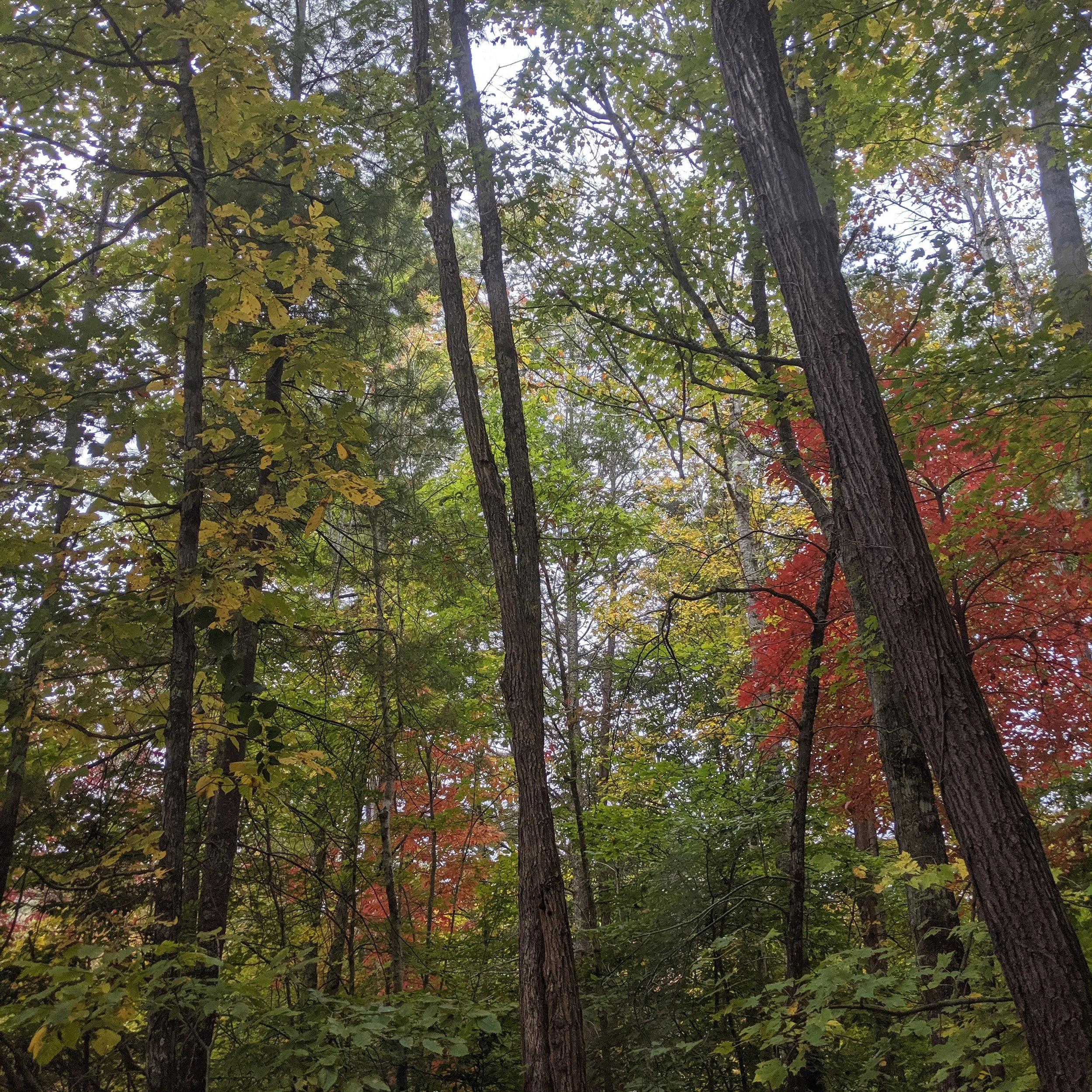
As the air cools and crisps, the trees change from shades of green to variations of honey, russet, amber, burnt sienna, scarlet, and then some; I find myself enamored. I was born and raised on O’ahu, Hawai’i, and seasonal shifts look very different. In Hawaiʻi we have two true seasons: summer (kau) from May to October and winter (hoʻoilo) from October to May. My motherlands are those of the tropics, with my father being of Native Hawaiian descent and my mother of Central American descent. I am very familiar with vibrant reds, oranges, and yellows, but within tropical flora and fauna, marine life, and surviving endemic wildlife. However, Autumn has never been a season I have anticipated with such child-like eagerness and wonder as this first year living in Western North Carolina.
As a Traditional Chinese Medicine (TCM) Practitioner and Acupuncturist, experiencing my first “true” Autumn allows me to more intimately understand this time of the Metal element and its natural rhythms and correspondences. When we understand how our body is a microcosm of the natural world and its rhythms, we are able to align ourselves and our needs effectively with the seasons.
In TCM, Autumn begins around August 7 and is called Lì Qiū. This may seem rather early for the start of Autumn, as heat waves briefly intensify and summer thunderstorms persist. It is said that while hot outside, we contract inside. It’s not just the return to responsibilities after summer vacation, it’s the season and the body’s connection to those natural rhythms that may make people feel a little less energetic and maybe even a little sad. Our body endures the heat and humidity, while Yīn energy grows inside of us. This can lead to digestive upset, skin flare ups, fatigue, and lowered affect, if not supported appropriately through our daily practices and healing interventions. In late September, around the 22nd or 23rd, we are at the Autumn Equinox, known as Qiūfēn or “Autumn Division” - Yīn and Yáng are in Fēn, “division” or “equal parts”. Night and day are nearly equal in length, with the nights growing longer as we make our trek towards winter. Days are temperate and begin to get cooler. Thus, Qiūfēn as a moment of harmony is a great time to cultivate harmony within ourselves and harvest the benefits from that balance.
Autumn Traditional Chinese Medicine Correspondences & Rhythms
Element: Metal
Color: White
Organs: Lungs & Large Intestine.
The Roles of the Lungs:
Respiration- When the Lungs function properly, they inhale “pure Qì” and exhale “dirty” or “pathogenic” Qì
Govern Qì (particularly in dispersing and descending directions)
Immunity (Wèi Qì)
Skin- The Lungs play a crucial role in body fluids that both moisten the skin and provide pores and interstices with the fluid necessary to flush out potential pathogens via sweat.
House the Po or “Corporeal Soul”, which is our physiological soul and could be likened to our Autonomic Nervous System.
Open into the Nose
The Roles of the Large Intestine:
Fluid Reabsorption
Excretion
Beyond its role of physically letting waste go, it also plays an important role in doing so emotionally. It helps us to not dwell in the past. When we hold onto our grief and do not process it, it can knot up the Qì flow and impact the relationship between the two Metal Elements with resulting manifestations as constipation, breathlessness, sadness, chills, and susceptibility to external pathogens.
External Pathogen/Evil (Liù Yín): Dryness
Emotion(s): Grief & Sadness
Autumn is the best time to process these emotions. When we allow ourselves the time and space to process grief, our Lung Qi can course the body effectively. This allows for improved immune function, respiration, circulation, and allows us to literally take in a breath of “fresh air”
Flavor: Acrid / Aromatic / Pungent
So, how do we cultivate harmony within our Metal Element? What sort of practices can we integrate during Autumn to foster a beneficial environment?
Food
*Note, these foods have an affinity to the Metal element, but have different benefits. Thus, the ones emphasized in your diet are largely dependent upon your individual TCM differential diagnosis determined by a TCM Practitioner like me! :)
Veggies & Fungi: Water chestnuts, daikon, lotus root, garlic, onions, leeks, cabbage, cauliflower, sweet potatoes, yams, pumpkins, mung bean sprouts, snow fungus
Fruits: pears, persimmons, figs, apples
Nuts & Seeds: almonds, white sesame seeds
Grains: millet, oats, amaranth, white rice, sorghum
Protein: tofu, miso paste fish, chicken
Herbs, Spices, & Other: astragalus, chrysanthemum, ginger, cinnamon, nutmeg, anise, licorice, horseradish, wasabi, and cardamom, honey
Preparation Methods: warm, moistening, soothing - braising, roasting, stewing - things like curries, soups, porridges, and poached or mulled fruit are emphasized
Steam Tenting & Humidifiers
Steam tenting can be very effective as a method to warm, disperse and lubricate our Metal Element. Since the Lung opens into the nose and dislikes dryness, the practice of steam tenting supports the lubrication of the airways the Lungs desire via the sense organ it opens into. I recommend steam tenting with eucalyptus, mint, mullein and rosemary for gentle cooling moisture and immune support. Humidifiers with essential oils of the herbs mentioned for steam tenting are also wise to combat Autumn dryness.
Breathwork
Practice deep belly breathing by sitting or laying outside, eyes closed, one hand on the chest and one on the belly. Focus breathing into the belly so that there is minimal movement on the hand that is placed on your chest, breathing in fresh air for four counts and exhaling deeply for eight counts.
Bundle Up
The Lungs are known as the delicate organ and have an intimate relationship with the exterior. Thus, it is important to protect our body from the fluctuating temperatures, particularly the External Pathogens (Liù Yín) of Wind, Cold, and Dryness. The first place that pathogens like Wind and Cold like to attack are the base of the skull, neck, and upper back, so it’s wise to always cover up these regions during this time. Before putting on that cute fall scarf, hat, and sweat, make sure to moisturize, to prevent dryness.

Autumn has a period of vibrancy that gifts us the last bit of overt Yáng energy, presenting as warm colored brush strokes enchanting Appalachia. However, these vibrant colors are fleeting and eventually we are met with skeletal trees showing the bare framework of the woods, as the energies draw inward to conserve and rest for Winter. As we think about this time transitioning us past the midpoint of the lunar calendar, we may be mourning the loss of things that have not come to fruition, reflecting on what we could have done better, or thinking about loved ones that are no longer here to celebrate the holiday season with us. This may make Autumn seem less enjoyable, but in TCM, grief is a necessary emotion not a negative one. Qiūfēn, as a moment of equal division followed by the decline of Yáng energy (outward, expansive, and active) towards Yīn (inward, slowing, and introspective), is an appropriate time to harvest our successes, holding them close with a sense of gratitude and warmth, while also making appropriate adjustments to our goals for the remainder of the year as we prepare for Winter.
Go Deeper
If you want more information and support along your health journey, I would be honored to help and I encourage you to book an appointment or free consultation with me. Additionally, check out our upcoming retreat, where I will dive deeper into some of the practical ways to benefit your Metal element to support immunity and letting go of that which no longer needs to be held inside.
May the vibrant Autumn leaves that fall from your tree reveal a strong and grand frame that prepares to rest and heal. May you reap a fruitful harvest that is a testament to the harmony within your elements.
Onward and Upward to Happier, Healthier Days,
Pomai
